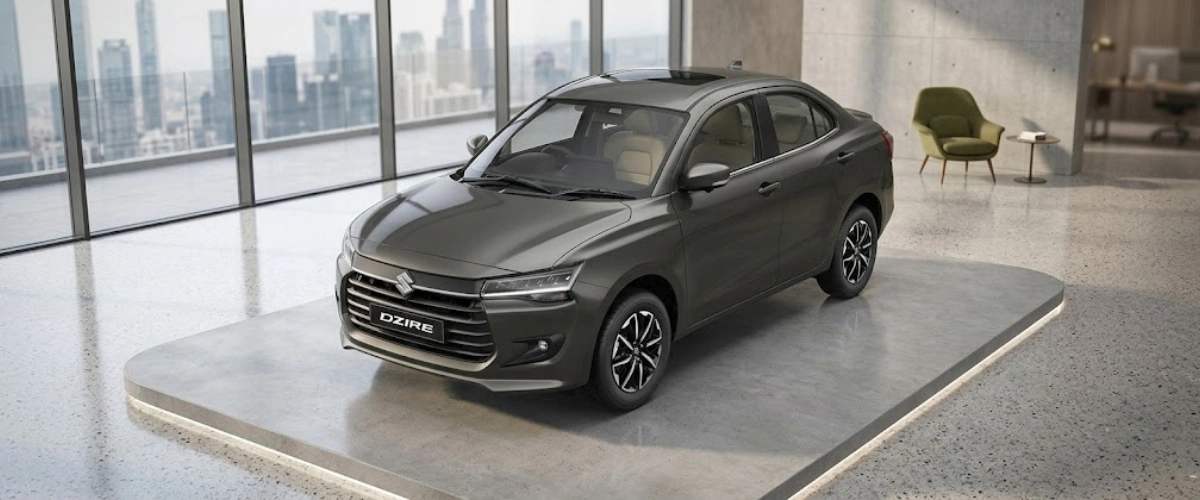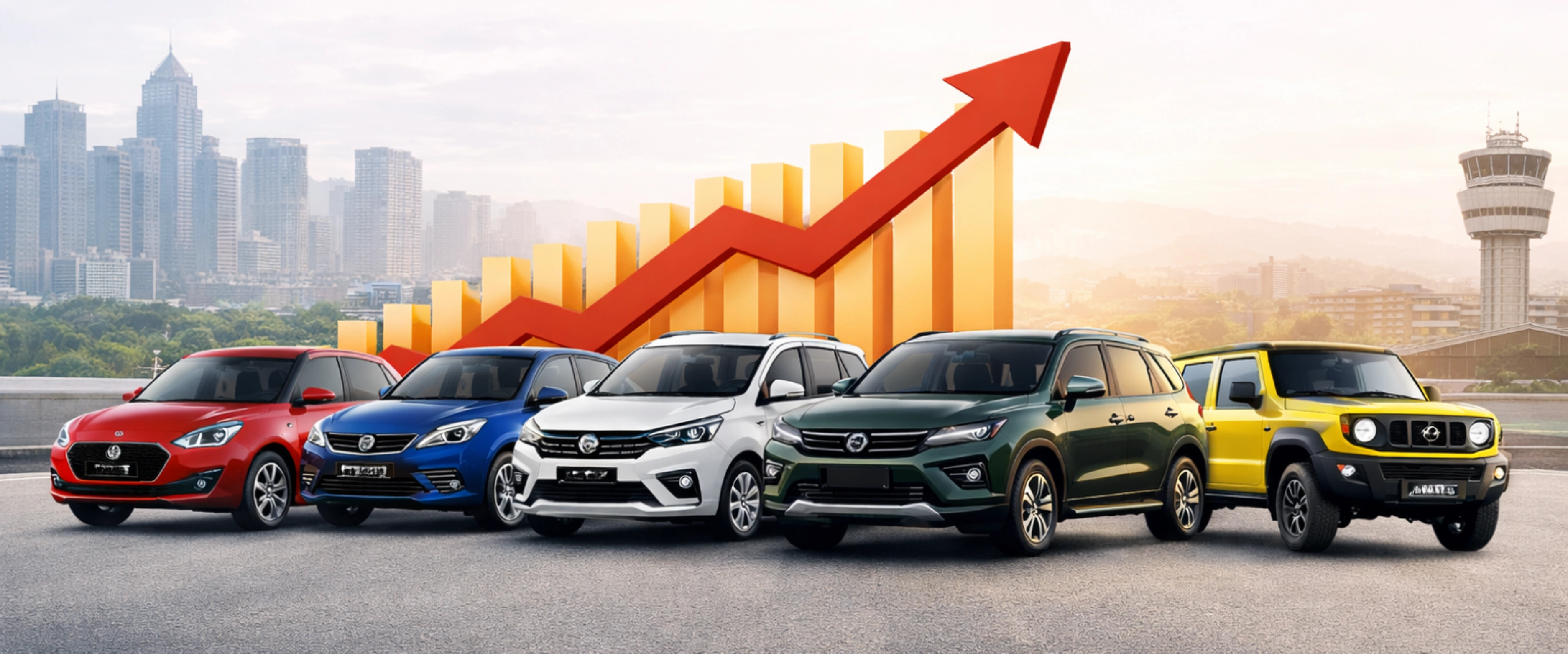
February 2026 turned out to be a strong month for Maruti Suzuki India as the country’s largest car manufacturer reported total sales of 2,13,995 units (approximately 2.14 lakh vehicles). This marks a healthy 7.3 percent growth compared to the same month last year, reinforcing the brand’s leadership in the Indian automobile market.
The sales performance reflects steady domestic demand, rising popularity of utility vehicles, and a sharp increase in exports. Let’s take a detailed look at the complete breakdown.
Overall Sales Performance
In February 2026, Maruti Suzuki recorded total sales of 2,13,995 units, up from 1,99,400 units in February 2025. The growth is a result of balanced performance across domestic passenger vehicles, commercial vehicles, and a significant boost in exports.
While some segments witnessed marginal fluctuations, the overall numbers indicate stability in the Indian passenger vehicle market along with strong global demand for Maruti products.
Domestic Sales Analysis
Passenger Vehicle Segment
In February 2026, Maruti Suzuki India sold around 1.61 lakh passenger vehicles in the domestic market. While the year-on-year growth in this segment remained largely stable, the consistency itself is noteworthy considering the increasing competition from both domestic and global carmakers.
The Indian passenger vehicle market is currently experiencing a structural transformation. Customers are upgrading faster, financing options are more accessible, and feature expectations have risen significantly. Despite these shifts, Maruti Suzuki has managed to hold its ground, supported by its extensive dealership network, strong resale value, and low maintenance costs.
Mini and Compact Cars
The mini and compact segments continue to form the backbone of Maruti Suzuki’s domestic volumes. Entry-level and mid-size hatchbacks remain popular in Tier-2 and Tier-3 cities, where affordability and fuel efficiency are key decision factors.
Key contributors in this category include:
Alto
S-Presso
WagonR
Swift
Baleno
Celerio
These models collectively contribute a substantial portion of the company’s monthly volumes. However, compact car sales witnessed a slight decline compared to last year. This reflects a gradual shift in consumer mindset. Buyers are now more inclined toward vehicles offering:
Higher ground clearance
Bigger cabin space
Advanced infotainment systems
Enhanced safety features
SUV-like styling
Urban customers in particular are upgrading directly from entry-level hatchbacks to compact SUVs, bypassing traditional mid-size hatchbacks. As a result, while small cars remain important for volume stability, their growth momentum has slowed.
Utility Vehicles: The Growth Driver
Utility Vehicles (UVs) emerged as the strongest growth engine for Maruti Suzuki in February. The company sold 72,756 units in this segment, registering double-digit year-on-year growth. This surge clearly indicates where the Indian automobile market is headed.
Major contributors include:
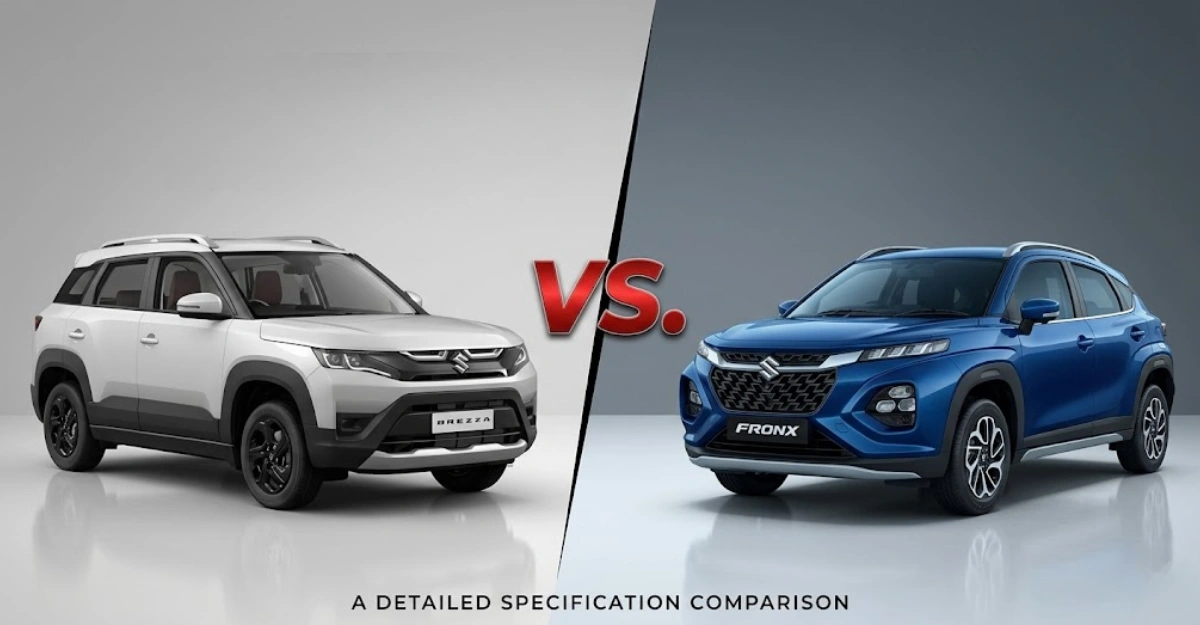
Brezza
Ertiga
Grand Vitara
Fronx
XL6
Jimny
The popularity of these vehicles highlights several evolving customer priorities. Indian buyers increasingly prefer SUVs and MPVs for their commanding road presence, flexible seating configurations, better boot space, and ability to handle varied road conditions.
The Ertiga and XL6 continue to attract large families and fleet buyers, while models like the Brezza, Fronx, and Grand Vitara appeal to urban professionals seeking a premium yet practical driving experience. Meanwhile, the Jimny caters to a niche audience looking for lifestyle-oriented, off-road capability.
This segment’s growth also reflects improved fuel efficiency in modern SUVs, competitive pricing, and the availability of hybrid powertrain options in select models.
Light Commercial Vehicles
Maruti Suzuki’s light commercial vehicle offering, the Super Carry, recorded sales of approximately 3,130 units in February, showing a healthy rise compared to last year.
This improvement suggests growing activity in small businesses, rural markets, and last-mile delivery services. With the expansion of e-commerce, local distribution networks, and small enterprise growth, demand for compact and affordable commercial vehicles has strengthened.
The Super Carry remains popular due to:
Low acquisition cost
Fuel-efficient engine options
Strong load-carrying capability
Wide service network support
Overall, the domestic sales mix clearly indicates that while small cars continue to provide stability, it is the utility vehicle segment that is driving growth and shaping Maruti Suzuki’s future product strategy in India.
Export Performance
One of the biggest highlights of February 2026 was Maruti Suzuki’s export growth. The company exported 39,155 units during the month, registering a significant 56.5 percent year-on-year increase.
This strong export performance demonstrates:
Rising acceptance of Indian-manufactured vehicles in global markets
Competitive pricing and fuel-efficient engine options
Strengthening distribution networks in overseas regions
Exports are becoming an increasingly important pillar for Maruti Suzuki as it expands its global footprint and reduces dependency on the domestic market alone.
Key Takeaways from February 2026 Sales
The February sales report highlights several important trends:
Overall growth of 7.3 percent year-on-year
Strong double-digit growth in the utility vehicle segment
Stable domestic passenger vehicle demand
Significant jump in exports
Moderate softness in compact car sales
These trends clearly indicate that the Indian automobile market is undergoing a structural shift toward SUVs and premium offerings.
Market Outlook
Looking ahead, Maruti Suzuki’s performance will largely depend on how well it adapts to evolving customer expectations. The rising preference for SUVs is expected to continue, while hybrid and electric mobility solutions may gradually gain importance in the coming years.
With a diversified product portfolio, strong dealer network, and growing export presence, Maruti Suzuki appears well-positioned to maintain its leadership in the Indian automotive industry.
Conclusion
Maruti Suzuki’s February 2026 sales figures underline the company’s resilience and strategic strength. Selling approximately 2.14 lakh vehicles in a single month is a testament to its brand trust and wide product appeal.
While compact cars remain a core part of its identity, it is the expanding utility vehicle lineup and strong export momentum that are currently powering growth. If this trend continues, Maruti Suzuki is likely to sustain its dominant position in the Indian automobile market throughout 2026.

Rohit Sharma
AuthorLast updated 17 hours ago