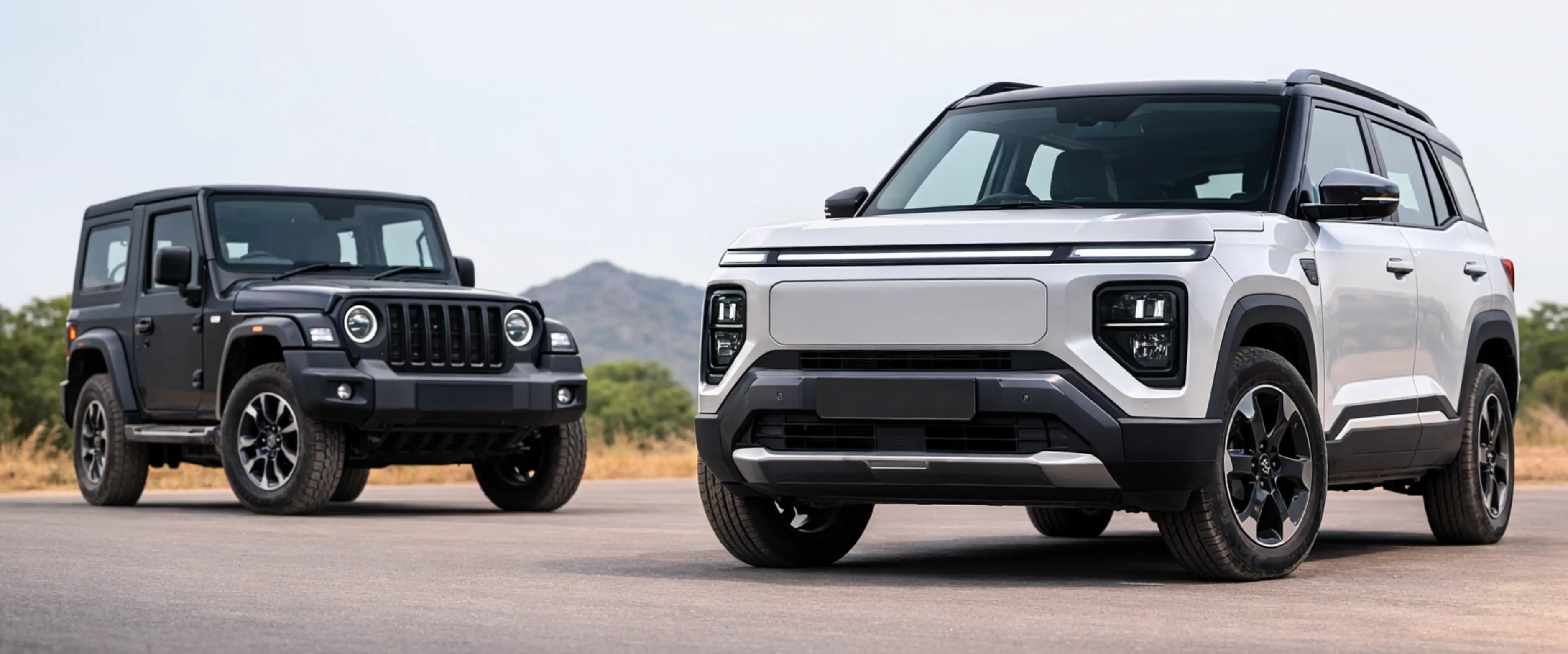
India's automobile industry is on the verge of a historic moment. On June 5, 2026 — World Environment Day — Maruti Suzuki is set to launch India's first flex fuel car capable of running on 100% ethanol. Union Minister of Road Transport and Highways Nitin Gadkari made the announcement on May 23, 2026, confirming that Maruti Suzuki India Ltd will launch the country's first flex-fuel car capable of running on up to 100% ethanol. This is not just a product launch. It is the beginning of a new chapter in how India fuels its vehicles.
What Is a Flex Fuel Car and What Is E100?
Before diving into the launch details, it is important to understand what these terms actually mean.
A flex fuel vehicle (FFV) is a car whose engine can run on a range of fuel blends — from standard petrol to high-concentration ethanol mixtures — without any modification from the driver's side. The engine automatically adapts to whatever blend is in the tank.
E100 means pure ethanol — 100% ethanol with no petrol mixed in. Ethanol (chemical formula C2H5OH) is a bio-based alcohol produced from agricultural crops like sugarcane, maize, rice, and barley. It burns cleaner than petrol, produces fewer harmful emissions, and — critically for India — can be produced domestically, reducing dependence on imported crude oil.
To put this in perspective, India currently sells E20 fuel, a blend of 20% ethanol and 80% petrol, which became mandatory nationwide from April 1, 2026. The jump from E20 to E100 is enormous — both in terms of engineering complexity and the potential environmental and economic benefits.
The Big Announcement: What Gadkari Said
Nitin Gadkari, Minister of Road Transport and Highways, announced during an event in Nagpur that Maruti Suzuki is expected to unveil a flex-fuel vehicle on World Environment Day on June 5. "Vehicles with such flex-fuel engines are going to be introduced on a large scale soon," Gadkari said. "On the occasion of Environment Day this year, there is a programme in Delhi where Maruti Suzuki will launch vehicles running 100% on ethanol," he added.
The minister underlined the broader energy security rationale, noting that the launch of such a vehicle would deliver cost-effective, pollution-free, and indigenous fuel production and supply to Indian consumers. Gadkari also pointed out that around 12 companies — including Toyota, Tata Motors, Mahindra and Mahindra, and Maruti Suzuki — had already showcased flex-fuel vehicles.
This announcement was not made in isolation. It comes after a critical regulatory step: the Ministry of Road Transport and Highways in April included E100 (pure ethanol) under automobile testing and certification norms, clearing the path for the introduction of pure ethanol-powered vehicles.
Which Model Will It Be?
This is the question every car enthusiast is asking. Maruti Suzuki India Ltd will launch India's first flex-fuel car in June, according to a senior company official. The flex-fuel WagonR is expected to run on E85, a fuel blend containing 85% ethanol and 15% petrol, though it is unclear if it can also handle pure ethanol.
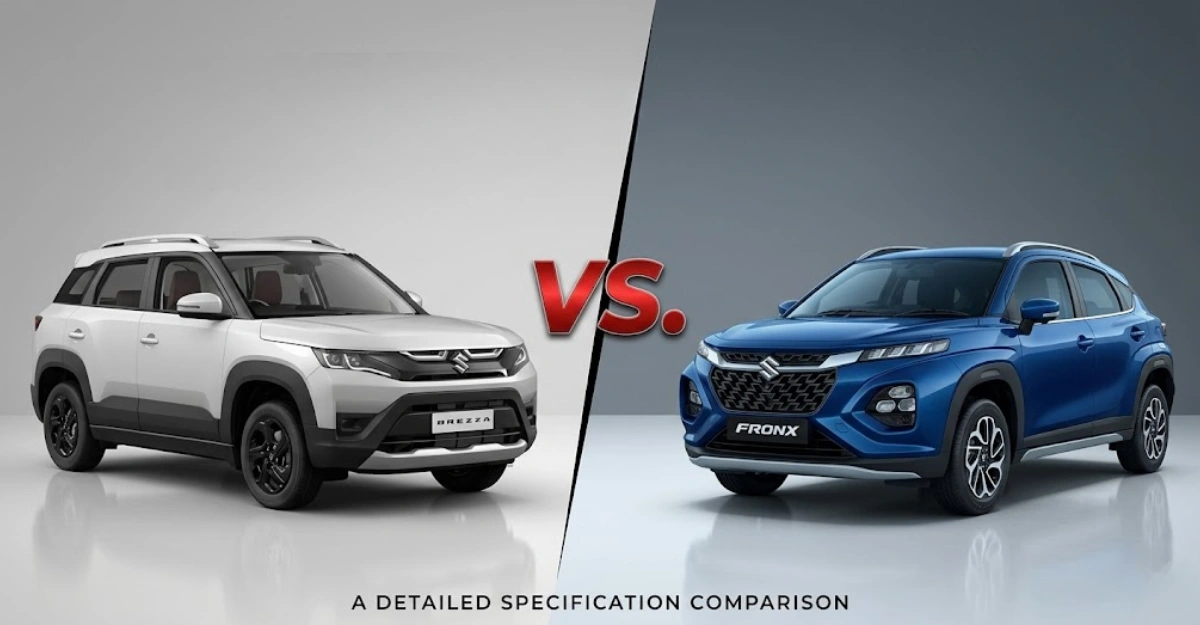
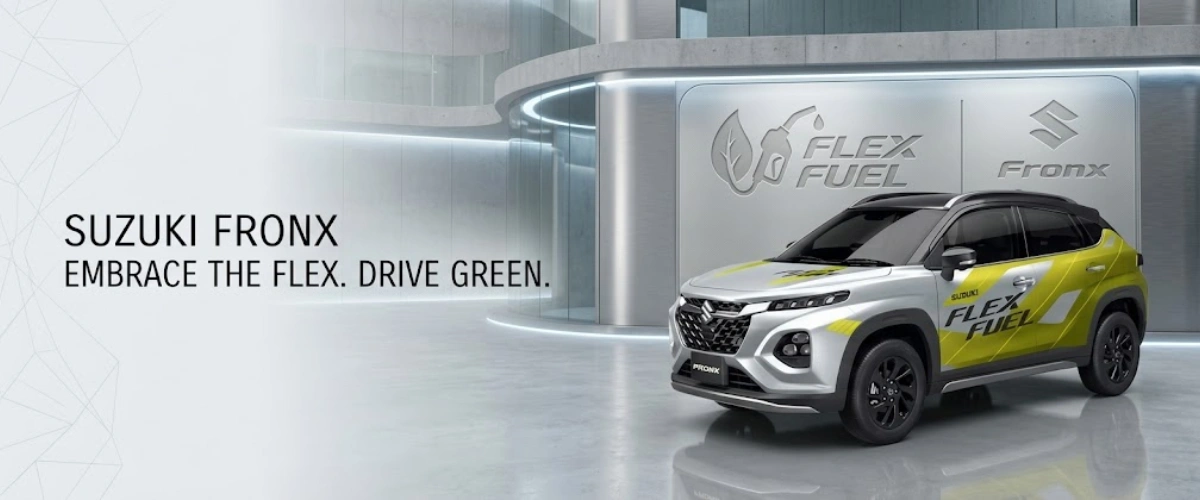
However, the picture is slightly more complex. Suzuki showcased a flex fuel version of the Fronx sub-4m coupe SUV at the Japan Mobility Show 2025 in Tokyo. Interestingly, that Fronx Flex Fuel vehicle was only capable of running on fuel blends of up to E85 (85% ethanol) and not E100. There is a strong probability that Maruti Suzuki might introduce the E100-capable flex fuel vehicle based on a different model than the Fronx.
The soon-to-launch Maruti Suzuki E100-capable flex fuel vehicle will be India's first four-wheel vehicle capable of running on a combination of fuels with blends of up to E100, using specially designed fuel storage, delivery, and ignition systems.
Whether it is the WagonR, the Fronx, or an entirely different model, the engineering challenges are significant. Running an engine on pure ethanol requires specially treated fuel tanks and lines (ethanol is corrosive to certain materials), recalibrated fuel injection systems, modified ignition timing, and different compression ratios compared to standard petrol engines. Maruti's decision to bring this to market first, even before E100 fuel is commercially available at pumps, signals the company's long-term confidence in the technology.
India's Ethanol Journey: The Road That Led Here
To understand why this launch matters, you need to understand how far India has come on ethanol.
India's Ethanol Blended Petrol programme achieved a monumental milestone when India successfully hit its 20% ethanol blending target (E20) in 2025, a full five years ahead of its original 2030 deadline. As of April 2026, all petrol sold across India must contain 20% ethanol and meet a minimum Research Octane Number (RON) of 95. India's ethanol production capacity has skyrocketed from under 2 billion litres in 2014 to nearly 20 billion litres, far exceeding the 11 billion litres required for the E20 mandate.
The economic impact has been staggering. From Ethanol Supply Year 2014–15 to ESY 2024–25, ethanol blending by public sector oil marketing companies led to foreign exchange savings exceeding ₹1.44 lakh crore and crude oil substitution of around 245 lakh metric tonnes. During this period, carbon dioxide emissions were reduced by roughly 736 lakh metric tonnes — equivalent to planting about 30 crore trees.
Ethanol procurement till 2025 earned farmers ₹1.18 lakh crore and distilleries ₹1.96 lakh crore, effectively turning India's farmers from food providers into energy providers.
This is the foundation on which the E100 flex fuel vehicle launch is being built. India is not experimenting. It is scaling.
The Infrastructure Challenge: Will E100 Fuel Be Available?
This is the most practical concern for anyone excited about this launch. The introduction of the flex-fuel-compatible Maruti Suzuki will mark the first instance of an automaker entering the segment before the corresponding fuel becomes commercially available. In other words, you could potentially own India's first E100 flex fuel car, but you may not be able to fill it with E100 on your way home from the showroom — at least not immediately.
Plans are underway to establish around 5,000 E100 fuel stations across the country within the next two years, a move aimed at reducing dependence on crude oil imports.
The key advantage of a true flex fuel vehicle is that it does not require pure E100 to run. It can operate on any blend — from standard E20 petrol available at every pump in India today, all the way up to E100 when those stations come online. So buying an FFV now means you are ready for the infrastructure as it arrives.
Why Maruti Suzuki Was Always the Right Brand for This
Maruti Suzuki is not just any carmaker launching this product. It is the largest carmaker in India by volume, accounting for roughly 40% of all passenger vehicles sold in the country. When Maruti moves, the industry moves.
Rahul Bharti, Senior Executive Officer, Corporate Affairs at Maruti Suzuki, said during the company's quarterly earnings call: "We have the technology, whether it is for ethanol blending increase or for flex-fuel vehicles. We have the technology and we'll support the government whenever the need arises.
Maruti's parent company Suzuki already has real-world experience with ethanol-powered vehicles. A few Japanese automakers, including Suzuki and Honda, already sell flex-fuel motorcycles in India. The leap from two-wheelers to four-wheelers is a natural progression.
What This Means for Indian Car Buyers
Lower running costs. Ethanol in India is significantly cheaper than petrol per litre. Although a flex fuel engine may consume slightly more ethanol than an equivalent amount of petrol (due to ethanol's lower energy density), the price difference can still result in lower per-kilometre running costs, especially as ethanol production scales up.
Reduced import dependency. India imports approximately 85% of its crude oil. Every litre of domestic ethanol that replaces imported petrol reduces this vulnerability. For a country spending enormous amounts of foreign exchange on crude oil every year, this matters at a macroeconomic level that eventually affects inflation and fuel prices.
Environmental benefits. Ethanol is a cleaner burning fuel than petrol. It produces lower levels of particulate matter, carbon monoxide, and unburned hydrocarbons. For cities like Delhi, Mumbai, and even Chandigarh, which regularly face air quality challenges, this is directly relevant to public health.
Future-proofing your purchase. If you buy an E100 flex fuel vehicle today and E100 becomes widely available in two to three years, your car will be ready. You will not need an upgrade.
The Bigger Picture: India's Ethanol Ambition
The Union Minister for Road Transport and Highways has advocated for India to move towards 100% ethanol blending (E100) in the near future to achieve energy self-reliance and insulate the country from global oil supply shocks.
India is now advancing toward E85, higher blends, and even 100% ethanol (E100) initiatives for future vehicles. Production has surged to record levels, with roughly 1,800 crore litres produced in the 2025-26 ethanol supply year, utilizing sugarcane, molasses, and grain — maize and rice.
The June 5 launch is strategically timed for World Environment Day. It sends a message not just to Indian consumers, but to the global automotive community — that India is serious about biofuel-led mobility, and it has the agricultural backbone, the industrial capacity, and now the vehicle technology to back that ambition up.
Key Takeaways
Maruti Suzuki is set to launch India's first 100% ethanol-capable flex-fuel car on June 5, 2026. The launch is expected to take place on the occasion of World Environment Day, celebrated globally on June 5. This marks a major milestone for India's automobile industry as the country moves towards cleaner and more indigenous fuel alternatives.
The likely model is a variant of the WagonR or possibly a revised version of the Fronx prototype shown at the Japan Mobility Show. The car will feature specially engineered fuel systems capable of handling ethanol blends from E20 to E100. E100 pump availability will follow over the next one to two years, with 5,000 stations targeted. The car will function on regular E20 petrol available nationwide until then.
India has saved over ₹1.44 lakh crore in foreign exchange through its ethanol programme since 2014. The E100 vehicle launch is the next step in that journey — this time putting the choice directly in the hands of Indian consumers.
Conclusion
The Maruti Suzuki E100 flex fuel car launch on June 5, 2026, is one of the most consequential moments in Indian automotive history. It arrives at the intersection of energy security, environmental policy, agricultural economics, and consumer technology. This is not a concept car at an expo. This is a production vehicle from India's largest automaker, announced by a sitting Cabinet minister, timed for World Environment Day.
Whether you are a car buyer, a policy watcher, or someone who simply pays attention to petrol prices, this launch deserves your attention. India's energy future is being built one blend at a time — and it just took a significant leap forward.

Rohit Sharma
AuthorLast updated 15 hours ago